
Introduction: Why Amethyst is More Than Just a Gemstone

Amethyst is one of the world’s most beloved and recognized gemstones, admired for its rich purple hue and deep spiritual symbolism. Known as the “Stone of Spirituality and Calmness”, Amethyst has fascinated civilizations for thousands of years. From ancient Greek myths to modern-day healing practices, this crystal has earned its reputation as a gem of wisdom, peace, and protection.
But Amethyst is not just about beauty. It carries with it a story of geological wonder, cultural heritage, and spiritual depth. Whether placed in a royal crown, worn as jewelry, or kept as a meditation stone, Amethyst continues to enchant people across the globe.
In this ultimate guide, we’ll uncover everything about Amethyst—its origins, legends, healing powers, symbolism, modern uses, and scientific secrets.
1. The Geological Story of Amethyst
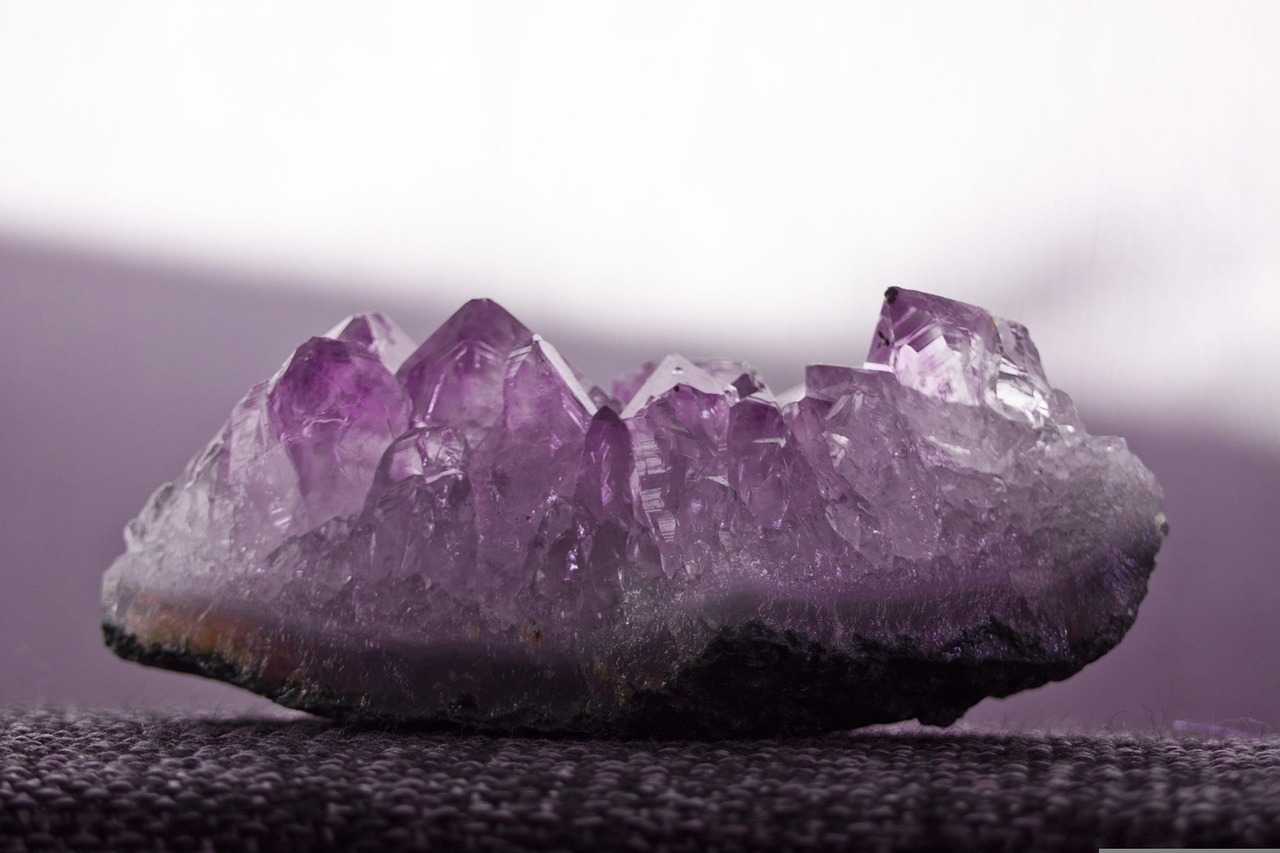
Amethyst is a variety of Quartz (SiO₂), one of the most abundant minerals on Earth. What makes Amethyst stand out is its stunning purple color, ranging from delicate lilac to deep violet.
Formation Process
- Amethyst forms inside geodes—hollow cavities within volcanic rocks.
- Over millions of years, silica-rich water containing traces of iron and manganese flows into these cavities.
- With heat and pressure, quartz crystals begin to grow, and radiation exposure alters the iron impurities, creating the purple shade.
This natural process makes every Amethyst crystal unique, with variations in hue and clarity.
Where is Amethyst Found?
Some of the most famous Amethyst sources include:
- Brazil – Produces large geodes with deep purple color.
- Uruguay – Known for darker, almost royal violet Amethyst.
- Zambia & Africa – Rich, saturated purple shades.
- India & Sri Lanka – Often lighter tones, used in jewelry.
- Russia – Once home to “Siberian Amethyst,” prized for its rare deep purple with flashes of blue and red.
2. History & Legends of Amethyst
Amethyst has a mythical past, deeply rooted in legends and cultural beliefs.
Greek Mythology
The word “Amethyst” comes from the Greek word “Amethystos,” meaning “not intoxicated.”
- Ancient Greeks believed Amethyst could protect them from drunkenness.
- Wine goblets were often carved from Amethyst, as it was thought to keep drinkers sober.
Egyptians & Romans
- Ancient Egyptians used Amethyst in amulets and jewelry for protection.
- Romans wore Amethyst rings and talismans to stay grounded and clear-headed during important events.
Medieval Europe
- Amethyst was associated with royalty and the church.
- Bishops wore Amethyst rings as a symbol of piety and spiritual clarity.
- It was also believed to protect soldiers in battle and bring victory.
Royal Connection
For centuries, Amethyst was considered as valuable as diamonds, rubies, and sapphires. Many royal collections still hold lavish Amethyst jewelry and crowns.
3. Amethyst in Modern Culture
Even though Amethyst has ancient roots, its relevance in the modern world is stronger than ever. Today, Amethyst is:
- February’s Birthstone – Symbolizing peace, sincerity, and inner strength.
- Anniversary Gemstone – Traditionally given on the 6th wedding anniversary as a gift of loyalty and trust.
- Popular in Jewelry – From delicate pendants to large cocktail rings, Amethyst is affordable yet luxurious.
- Decorative & Spiritual – Large geodes are placed in homes, spas, and yoga studios for their soothing energy and beauty.
Amethyst also plays a big role in the metaphysical community, where it’s cherished for meditation, energy balancing, and emotional healing.
4. Amethyst Meaning & Symbolism
Amethyst is often called the Stone of Peace, Wisdom, and Protection.
- Color Psychology – The color purple symbolizes royalty, spirituality, creativity, and mystery.
- Spiritual Symbolism – Linked with divine connection, purity of mind, and inner calm.
- Emotional Meaning – Represents balance, patience, and resilience against negativity.
In essence, Amethyst is seen as a bridge between the physical and spiritual worlds—a gem that calms the mind while elevating consciousness.
5. Amethyst Healing Properties
Amethyst is widely known as one of the most powerful healing crystals. Its benefits are divided into emotional, physical, and spiritual realms.
🌿 Emotional Healing
- Reduces stress, anxiety, and irritability.
- Helps combat overthinking and mental clutter.
- Brings inner peace and emotional stability.
🌙 Physical Healing
- Supports better sleep quality—often placed under pillows to prevent insomnia.
- Believed to help with headaches and migraines.
- Boosts immunity and helps detoxify the body.
🔮 Spiritual Healing
- Opens the Crown Chakra (Sahasrara) and Third Eye Chakra (Ajna).
- Enhances intuition, meditation, and spiritual growth.
- Acts as a shield against negative energies and psychic attacks.
6. How to Use Amethyst
There are countless ways to invite Amethyst’s calming energy into your life.
💎 In Jewelry
- Rings, pendants, bracelets, and earrings keep Amethyst’s energy close to the body.
- Amethyst jewelry is both stylish and spiritually meaningful.
🧘 In Meditation
- Hold an Amethyst crystal or place it on your Third Eye during meditation.
- It deepens focus, enhances visualization, and connects with higher consciousness.
🏡 At Home & Work
- Place Amethyst clusters or geodes in living spaces to absorb negative energies.
- Keep it on your work desk to increase focus and reduce stress.
🌙 For Sleep
- Slip a small Amethyst under your pillow to prevent nightmares.
- Many people report more peaceful dreams and improved rest.
7. Different Types of Amethyst Crystals
Amethyst comes in many beautiful forms, each with its own appeal:
- Raw Amethyst Clusters – Natural, jagged formations used for home décor and energy cleansing.
- Tumbled Amethyst – Smooth, pocket-sized stones for meditation or carrying daily.
- Amethyst Geodes – Large hollow rocks lined with purple crystals; prized for their beauty and energy.
- Chevron Amethyst – Features striking white quartz bands along with purple.
- Vera Cruz Amethyst – High-vibration, pale crystals from Mexico, often very clear.
- Ametrine – A rare fusion of Amethyst and Citrine, showing both purple and golden hues.
- Lavender Amethyst – Lighter shades of purple, sometimes almost pink.
8. How to Identify Real vs. Fake Amethyst
With its popularity, Amethyst is sometimes imitated with dyed glass or synthetic quartz. Here’s how to spot genuine Amethyst:
- Color – Natural Amethyst has uneven color distribution, not perfectly uniform.
- Clarity – Too-perfect clarity may indicate synthetic. Real stones often have small inclusions.
- Temperature – Real crystals feel cool to the touch, even in warm conditions.
- Origin Verification – Buy from trusted sellers who provide source details.
9. Caring for Your Amethyst
To keep your Amethyst vibrant and effective, proper care is essential.
- Cleaning – Wash with mild soap and lukewarm water. Avoid harsh chemicals.
- Avoid Sunlight – Prolonged sunlight can fade Amethyst’s purple color.
- Charging & Re-Energizing –
- Place under moonlight (especially full moon).
- Use selenite or sound vibrations to cleanse.
- Meditation or intention-setting can recharge its energy.
10. Scientific Insights: Why Amethyst is Purple?
The magical purple of Amethyst has a scientific explanation.
- Amethyst is quartz infused with iron impurities.
- Natural radiation from surrounding rocks alters these iron traces, giving the stone its iconic color.
- Heat treatment can turn Amethyst yellow or orange, creating Citrine.
This blend of geology and chemistry makes Amethyst both a natural wonder and a symbol of transformation.
11. Amethyst in Astrology & Zodiac
Astrology has always valued gemstones, and Amethyst shines brightest for:
- Zodiac Signs – Aquarius and Pisces benefit most from Amethyst’s calming and intuitive energy.
- Planet Connection – Ruled by Jupiter, bringing wisdom and spiritual expansion.
- Birthstone – February’s official birthstone, representing clarity and sincerity.
12. Amethyst in Feng Shui & Vastu
In energy-balancing systems like Feng Shui and Vastu:
- Placing an Amethyst cluster in the living room invites peace and harmony.
- In the bedroom, it promotes restful sleep.
- On a work desk, it encourages productivity and focus.
- Near entrances, Amethyst acts as a protective shield against negative energy.
13. FAQs About Amethyst
Q1. Can Amethyst really help with sleep?
Yes, many people place it under their pillow to reduce nightmares and promote deep rest.
Q2. Is Amethyst expensive?
It is affordable compared to many gemstones, though large geodes and rare varieties can be costly.
Q3. Can Amethyst be worn every day?
Yes! It’s durable enough (7 on Mohs scale) and beneficial for daily use.
Q4. Does Amethyst lose its color?
Only if exposed to direct sunlight for long periods. Keep it away from heat and UV rays.
Q5. Which chakra does Amethyst work with?
It primarily activates the Crown Chakra and Third Eye Chakra.
14. Conclusion: Why Amethyst is a Timeless Gem of Peace & Power
Amethyst is far more than a pretty purple crystal—it is a stone of history, science, spirituality, and healing. Its journey from volcanic formations to royal crowns and meditation circles proves its universal appeal.
Whether you cherish Amethyst for its beauty, symbolism, or healing energy, it remains a timeless companion in the quest for balance, peace, and spiritual connection.
Owning Amethyst is like holding a piece of Earth’s wisdom and the Universe’s tranquility in your hands.
15. Amethyst in Mythology and Folklore
Throughout history, Amethyst has carried powerful symbolic meanings.
Greek Myth of Dionysus
The most famous legend comes from Greek mythology. Dionysus, the god of wine, once pursued a maiden named Amethystos. She prayed to the goddess Artemis for protection, and Artemis turned her into a pure white quartz statue. Dionysus, realizing his mistake, poured wine over the statue, staining it purple—thus creating Amethyst.
This is why the stone is linked to sobriety, clarity, and protection from intoxication.
Egyptian Beliefs
The ancient Egyptians used Amethyst in amulets to guard against harm and negative spirits. It was considered a protective talisman for travelers.
Chinese Legends
In traditional Chinese culture, Amethyst was believed to dispel negative chi and encourage harmony in relationships.
Christian Symbolism
Amethyst was embraced by the Christian church during the Middle Ages. Bishops wore Amethyst rings to symbolize piety, purity, and spiritual authority. Even today, it is sometimes referred to as the “Bishop’s Stone.”
16. Amethyst and Meditation Practices
Meditation practitioners often turn to Amethyst for its ability to quiet the mind.
- Third Eye Meditation – Placing Amethyst on the forehead helps open the Third Eye chakra, heightening intuition and psychic awareness.
- Crown Chakra Work – Holding Amethyst while meditating enhances connection to higher consciousness.
- Deep Relaxation – Its calming vibrations make it a favorite for stress release and mindfulness practices.
Many yoga teachers and healers also keep Amethyst geodes in their practice spaces to encourage peaceful energy flow.
17. Amethyst in Jewelry Design
Amethyst is one of the most versatile gemstones in the jewelry world.
- Rings & Engagement Jewelry – In Victorian times, Amethyst was a popular gemstone for engagement rings, symbolizing devotion.
- Statement Necklaces – Large Amethyst pendants are worn as both a style statement and a spiritual amulet.
- Earrings & Bracelets – Provide subtle beauty while keeping its energy close to the body.
- Royal Jewelry – Catherine the Great of Russia famously collected Amethyst jewelry, and modern royals also wear it in crowns and tiaras.
Amethyst’s affordability compared to diamonds and rubies makes it a luxurious yet accessible gem.
18. Rare and Unique Amethyst Varieties
Some lesser-known but fascinating Amethyst varieties include:
- Rose de France Amethyst – A delicate, pastel lavender shade.
- Green Amethyst (Prasiolite) – Created when Amethyst is heat-treated, turning it green.
- Siberian Amethyst – Rare, deep purple stones with flashes of red and blue, historically considered the finest quality.
- Brandberg Amethyst – Found only in Namibia, often contains inclusions of Smoky Quartz or Clear Quartz, giving it a high spiritual vibration.
19. Amethyst in Modern Healing and Therapy
Beyond metaphysical uses, Amethyst is increasingly integrated into holistic wellness practices:
- Crystal Therapy – Healers place Amethyst on clients’ chakras to balance energy.
- Spa Treatments – Some spas use heated Amethyst stones in massages.
- Crystal-Infused Water Bottles – Believed to energize drinking water with calm and clarity.
- Sound Healing – Amethyst bowls are sometimes used in crystal sound therapy for deep resonance.
20. The Economic and Ethical Side of Amethyst
With its global popularity, Amethyst plays an important role in the gem trade.
- Mining Locations – Brazil and Uruguay remain the top suppliers.
- Affordability – Unlike rare gemstones, Amethyst is abundant, making it accessible.
- Ethical Sourcing – Conscious buyers today prefer responsibly mined stones that support local communities.
This has led to a growing awareness of sustainable gemstone practices in the Amethyst market.
21. Amethyst Through History: A Timeline of Meaning and Use
- Ancient Egypt (3000 BCE) – Amethyst was carved into amulets for protection in life and the afterlife.
- Ancient Greece (500 BCE) – Believed to prevent drunkenness; wine cups were carved from Amethyst.
- Roman Empire (27 BCE – 476 CE) – Used in rings and talismans for courage and clear thinking.
- Medieval Europe (5th – 15th Century) – Symbol of the church and worn by bishops; also believed to bring victory in battle.
- Renaissance (14th – 17th Century) – Royals adorned themselves with Amethyst crowns, scepters, and jewelry.
- Victorian Era (19th Century) – Amethyst became fashionable in romantic jewelry, symbolizing love and loyalty.
- Modern Era (20th Century – Present) – Celebrated as February’s birthstone, popular in holistic healing, meditation, and interior décor.
22. Daily Practical Uses of Amethyst: A Step-by-Step Guide
Amethyst isn’t just a stone to admire—it can be a daily companion. Here’s how:
🌅 Morning Routine
- Place Amethyst near your mirror or dresser to start your day with calm and focus.
- Wear Amethyst jewelry to carry protective energy throughout the day.
🧑💻 During Work/Study
- Keep a small Amethyst on your desk to reduce stress and improve focus.
- Hold it briefly during breaks to clear mental fog.
🏡 At Home
- Place clusters in the living room to promote harmony.
- Keep near the entrance to shield the household from negative energy.
🧘 During Meditation or Yoga
- Hold an Amethyst palm stone while meditating to deepen concentration.
- Place it on your Third Eye Chakra to awaken intuition.
🌙 Before Sleep
- Slip a tumbled stone under your pillow for peaceful dreams.
- Keep an Amethyst geode in the bedroom to create a restful atmosphere.
By weaving Amethyst into your daily routine, you transform it from a gemstone into a life companion.
23. Famous Amethysts in the World
Some Amethysts have become famous for their size, beauty, or legends:
- The Delhi Purple Sapphire (actually Amethyst!) – A cursed gemstone looted from a temple in India, later revealed to be Amethyst, now stored in London’s Natural History Museum.
- The Smithsonian Amethyst – A dazzling 400-carat gem on display in Washington, D.C.
- Russian Royal Collections – Catherine the Great adored Amethyst and filled her treasury with large specimens.
- Brazilian Geodes – Some cathedral-sized geodes from Brazil weigh several tons and are showcased in museums and galleries worldwide.
24. Amethyst in Pop Culture and Modern Design
Amethyst hasn’t lost its charm in today’s world. It appears in:
- Interior Design – Large Amethyst geodes are luxury décor items, often seen in celebrity homes and spas.
- Fashion – Designers use Amethyst in both fine jewelry and bohemian styles.
- Media & Entertainment – Referenced in books, TV shows, and games as a stone of magic, clarity, and wisdom.
- Wellness Trends – Crystal water bottles, face rollers, and healing jewelry often feature Amethyst for its calming reputation.
25. Why Amethyst Continues to Inspire
Amethyst stands at the intersection of science, spirituality, and style:
- Scientifically, it’s a marvel of geology.
- Spiritually, it’s a stone of wisdom, clarity, and peace.
- Culturally, it has graced kings, queens, priests, and healers for millennia.
Its lasting appeal lies in its ability to adapt—equally at home in an ancient temple, a royal crown, or a modern meditation space.
26. Scientific Formation of Amethyst: From Lava to Gem
Amethyst doesn’t just appear magically—it’s a geological wonder created over millions of years.
- Volcanic Origins – Amethyst typically forms inside gas cavities of volcanic rocks (geodes).
- Silica-Rich Fluids – Groundwater rich in silica and iron flows through the cavities.
- Crystallization – Over thousands of years, quartz crystals begin to grow.
- Coloration – Trace amounts of iron + natural irradiation give it the signature purple color.
- Variations – Depending on conditions, Amethyst may form as:
- Clusters (spiky formations)
- Geodes (hollow crystal caves)
- Points (single elongated crystals)
🔬 Fun fact: When heated, Amethyst often turns into Citrine (yellow quartz). This is why many commercial Citrines are heat-treated Amethysts!
27. Amethyst vs. Other Purple Gemstones
Purple gems are rare in nature. Here’s how Amethyst compares to its “siblings”:
| Gemstone | Hardness (Mohs) | Color Range | Rarity | Key Difference |
|---|---|---|---|---|
| Amethyst | 7 | Light to deep purple | Common | Affordable, accessible |
| Tanzanite | 6.5 | Violet-blue | Very rare (Tanzania only) | More brilliance, softer |
| Fluorite | 4 | Light purple to multicolor | Common | Softer, used for carvings |
| Spinel (Purple) | 8 | Lavender to deep violet | Rare | Harder, highly valued |
| Sapphire (Purple) | 9 | Rich violet-purple | Rare | Extremely durable, expensive |
✨ Takeaway: Amethyst is the most accessible purple gemstone, making it perfect for jewelry and décor, while others remain luxury options.
28. Amethyst in Different Cultures
- Greek & Roman – Symbolized sobriety; wine goblets carved from Amethyst were thought to prevent intoxication.
- Chinese Feng Shui – Used in wealth corners to attract abundance and harmony.
- Tibetan Buddhism – Amethyst is sacred to Buddha; used in prayer beads (mala).
- Christianity – Bishops’ rings often feature Amethyst, symbolizing spiritual wisdom.
- African Tribes – Sometimes worn by warriors for protection and courage.
29. Famous Amethyst Localities Around the World
- Brazil – Largest producer; home to giant cathedral geodes.
- Uruguay – Known for dark, saturated purple geodes.
- Russia (Ural Mountains) – Historic source for royal collections.
- Zambia – Produces some of the richest deep-purple crystals.
- United States (Arizona, North Carolina) – Small deposits, prized for collectors.
Each region’s Amethyst has unique hues and energy, making them popular with jewelers and healers alike.
30. Extended FAQ on Amethyst
❓ Is Amethyst valuable?
Yes, though it’s affordable compared to rare gems. Value depends on color intensity, size, and clarity. Deep, royal purple stones are the most prized.
❓ Can Amethyst fade in sunlight?
Yes! Prolonged exposure to sunlight can cause color fading. Best to store away from direct UV light.
❓ Is Amethyst natural or lab-made?
Both exist. Natural Amethyst forms in geodes, while synthetic Amethyst is lab-grown but chemically identical.
❓ Can Amethyst be worn every day?
Yes—its hardness (7 on Mohs scale) makes it durable enough for daily jewelry, though care is needed to avoid scratches.
❓ Is Amethyst safe in water?
Yes, short-term contact is safe, but avoid long soaks or saltwater to preserve shine.
31. How to Spot Fake Amethyst
With popularity comes imitation. Common fakes include dyed glass or synthetic quartz. Look for:
- Color Zoning – Natural Amethyst often has slight variations; fake ones look too perfect.
- Temperature Test – Glass warms quickly in your hand; real Amethyst feels cool longer.
- Price Check – If it’s “too cheap” for its size and quality, it may not be real.
32. The Psychological Impact of Amethyst
Beyond spiritual beliefs, modern psychology supports some effects:
- Color Therapy – Purple is linked to creativity, wisdom, and calmness.
- Mindfulness Aid – Holding Amethyst can act as a physical anchor in meditation.
- Stress Reduction – Studies suggest touching or focusing on calming objects reduces anxiety—Amethyst often plays this role.
33. Care & Maintenance of Amethyst
- Cleaning – Use mild soap + lukewarm water, avoid harsh chemicals.
- Storage – Keep away from harder gemstones (like diamonds) to prevent scratches.
- Recharging – Some place it under moonlight or near other crystals to refresh its energy.
34. The Eternal Appeal of Amethyst
Amethyst remains timeless because it bridges beauty, affordability, and symbolism. Whether:
- Adorning a royal crown,
- Enhancing meditation,
- Decorating a luxury home, or
- Simply sparkling in a ring…
…it continues to inspire humans across ages.
🌟 Conclusion: The Timeless Magic of Amethyst
Amethyst is more than just a gemstone—it’s a story carved in crystal. From its birth deep within volcanic geodes to its role in ancient civilizations, this violet wonder has carried wisdom, serenity, and elegance across the centuries.
It’s the Stone of Spiritual Connection, helping seekers calm their minds, balance their emotions, and step into higher awareness. Whether used in meditation, worn as jewelry, or displayed as a sparkling geode, Amethyst brings a touch of calm and beauty into everyday life.
Scientifically fascinating, historically cherished, and spiritually uplifting—Amethyst continues to shine as a gemstone that blends affordability with majesty. Its presence in modern culture proves that, even in today’s fast-paced world, humanity still seeks harmony, grounding, and inspiration.
💜 If you’re drawn to its purple glow, perhaps Amethyst is calling you to embrace its energy. Whether you choose it for healing, style, or simply admiration, this gem will always remain a symbol of peace, clarity, and timeless beauty.
